

What causes ceiling and drywall water damage?
Ceiling and drywall water damage is moisture that soaks into gypsum drywall or plaster from a leak above or behind it, causing stains, softening, sagging and eventually mold or collapse. The source is usually hidden: a roof leak, a bathroom leak on the floor above, a failed supply line in the wall, an HVAC condensate line, or condensation in a poorly ventilated attic.
Drywall acts like a sponge. It absorbs water quickly, loses its strength when wet, and holds moisture against the wood framing behind it. Plaster, common in older Charleston homes, absorbs more slowly but takes much longer to dry.
Common sources
- Roof leaks from missing shingles, failed flashing around chimneys and vents, or ice dams.
- Bathroom leaks from a toilet seal, tub drain, shower pan or failed grout above the ceiling.
- Supply line failures inside walls or ceilings, often after a freeze. See burst pipe water damage.
- HVAC condensate lines or pans that clog and overflow in attics and closets.
- Appliance leaks from upstairs washing machines, ice makers and water heaters.
- Attic condensation when bathroom fans vent into the attic instead of outside.
Signs to watch for
- Yellow or brown stains, often with darker rings at the edges
- Bubbling, peeling or cracking paint
- A ceiling that looks lower or bowed in one spot
- Soft or crumbly drywall when pressed
- Drips from a light fixture or smoke detector
- A musty smell in one room
A sagging ceiling can fall without warningKeep people and pets out of the room, move what you can from underneath, and do not poke it unless you are prepared for water to come down. If water is coming through a light fixture, turn off power to that circuit.
How ceiling and drywall water damage is handled
- Find and stop the leakThe source is traced, which may mean a roofer or plumber has to repair it before drying can finish.
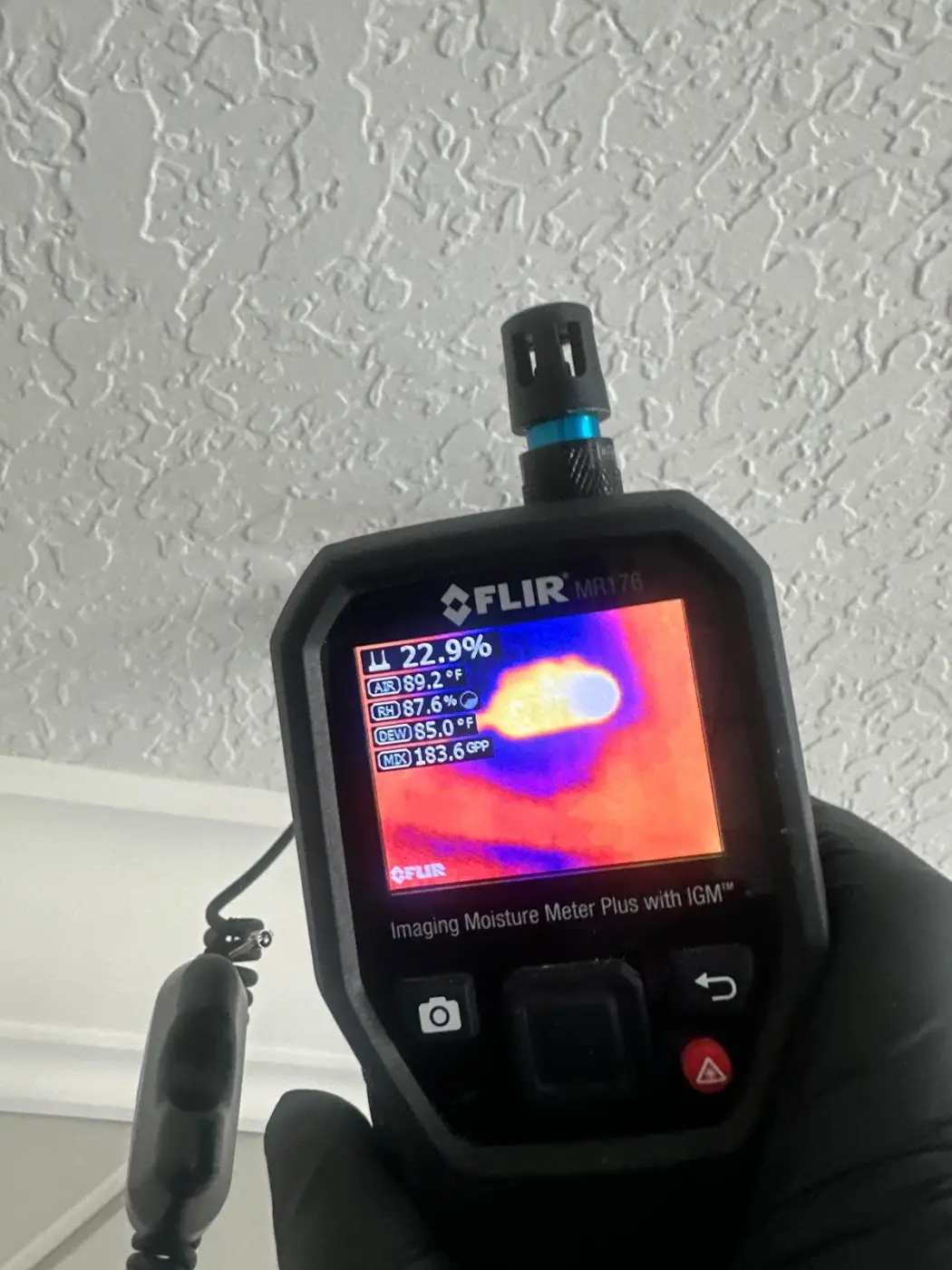
- Map the moistureMoisture meters and thermal imaging show how far the water spread, which is often much farther than the stain.
- Relieve and removeA sagging ceiling is drained safely and wet drywall that has lost its strength is taken down.
- Open wall and ceiling cavitiesInsulation that is wet is removed, and small openings let air reach the framing.
- Dry the structureAir movers and dehumidifiers dry the joists, studs and remaining drywall or plaster.
- Confirm and documentReadings confirm everything is dry before patching, and photos record the work.
Can a water-stained ceiling be painted over?
Only after the leak is fixed and the area has been tested dry. Painting over a stain while the material behind it is still wet traps moisture, and the stain usually bleeds back through. If the drywall is soft or sagging, it has to be replaced. Small stains on drywall that dried quickly can often be sealed with a stain-blocking primer and painted.
Drywall vs. plaster
| Drywall | Plaster | |
|---|---|---|
| How it reacts to water | Soaks up fast, softens and sags | Absorbs slowly, holds water longer |
| Can it be saved? | Often, if caught within a day or two | Often, with careful, longer drying |
| When it must go | Sagging, crumbling, mold, or contaminated water | Loose from the lath, crumbling or contaminated |
| Common in | Most homes built after the 1960s | Many older homes on the West Side and in the East End |
Mold and hidden damage
The main risk with ceiling and wall leaks is that they go unnoticed. Water can sit inside a wall or above a ceiling for weeks, and by the time a stain appears, mold may already be growing on the back of the drywall and on the framing. If you smell mustiness or see spotting, a mold inspection can confirm what is behind the surface.
Help across Charleston
Ceiling leaks turn up everywhere, from apartments in Downtown Charleston, where a leak upstairs can affect units below, to plaster ceilings in the East End and two-story homes in South Hills and South Charleston. This is one part of water damage restoration, and it often needs water extraction and drying to finish properly. For water, fire and mold damage anywhere in town, see home damage restoration in Charleston, WV.
Call to be connected with an independent local provider who can find the moisture and dry it out.
Ceiling and drywall water damage FAQs
How long does a wet ceiling take to dry?
Usually two to four days once the leak is fixed and air can reach the cavity. Plaster ceilings and wet insulation can take longer.
Does all the wet drywall need to be replaced?
No. Drywall that was wet with clean water for a short time and has not lost strength can often be dried in place. Sagging, crumbling or moldy drywall is replaced.
Why did the stain come back after I painted it?
Either the leak was not fixed, or the material behind the paint was still wet. Stains bleed through regular paint; a stain-blocking primer helps only after everything is dry.
Is a water-damaged ceiling dangerous?
A sagging ceiling can collapse and is heavy when wet. Water near light fixtures and wiring is also an electrical hazard.