

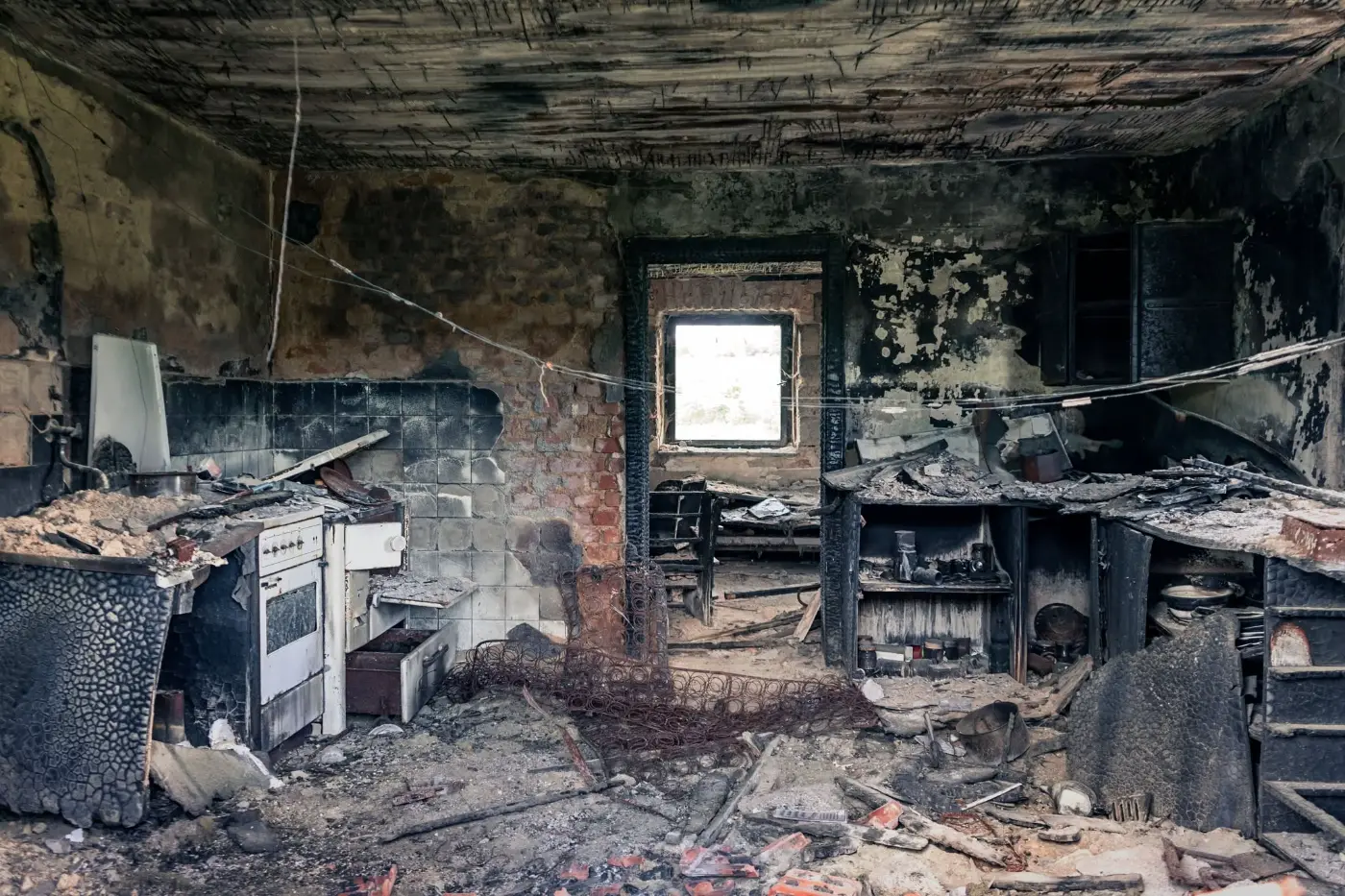
What is fire damage restoration?
Fire damage restoration is the cleanup and recovery work done after a fire: securing the building, removing soot and smoke residue, eliminating odor, drying the water used to put the fire out, and preparing the structure for repairs. It covers damage from the flames themselves, from smoke and soot that traveled through the house, and from firefighting water.
Even a small fire can affect the whole home. Smoke rises and spreads through every room, into closets, attic spaces and HVAC ducts. Soot is acidic, and the longer it sits, the more it etches and discolors surfaces.
What happens in the first 48 hours?
The days right after a fire decide how much can be cleaned rather than replaced:
- Hours 1 to 24: soot begins to yellow plastics and discolor grout and marble. Firefighting water starts soaking into drywall, insulation and flooring.
- Days 2 to 3: painted walls discolor permanently, metal fixtures start to tarnish and corrode, and wood finishes need refinishing.
- After several days: odor sets into porous materials, mold can grow in wet areas, and many surfaces can only be replaced.
That is why the first visit focuses on emergency board-up, drying out firefighting water, and starting smoke damage cleanup on the surfaces most at risk.
The three types of damage after a fire
Fire and heat damage
Charred framing, burned drywall, melted fixtures and heat-damaged windows. Heavily charred materials are removed. Lightly scorched framing can sometimes be cleaned and sealed.
Smoke and soot damage
Soot coats walls, ceilings, contents and the inside of ductwork. The type of soot depends on what burned and how:
| Soot type | Comes from | What it is like |
|---|---|---|
| Dry soot | Fast, hot fires burning paper and wood | Powdery, easier to vacuum and sponge off |
| Wet soot | Smoldering, low-heat fires burning plastics and rubber | Sticky and smeary, spreads if wiped |
| Protein residue | Kitchen fires burning food | Nearly invisible, yellowish, with a strong odor |
| Fuel oil soot | Furnace puff-backs | Dense and oily, common in older homes with oil heat |
Using the wrong method on the wrong soot sets it into the surface. That is why soot removal starts with testing.
Water damage from firefighting
Fire hoses put a lot of water into a house. Left alone, that water causes the same problems as any flood: swollen floors, sagging ceilings and mold. Drying it out is part of fire restoration, using the same extraction and drying methods as water damage restoration.
How does the restoration process work?
- Safety check and securing the propertyOnce the fire department clears the building, openings in walls, windows, doors and roof are boarded up and tarped.
- Assessment and documentationEvery room is inspected and photographed, and a written scope of work is prepared.
- Water removal and dryingFirefighting water is extracted and the structure is dried with air movers and dehumidifiers.
- Soot and smoke cleanupSurfaces are cleaned with dry sponges, HEPA vacuums and the right cleaning chemistry for the soot type. HVAC systems are cleaned so they do not spread residue.
- Odor removalOdor sources are cleaned or removed, then thermal fogging, hydroxyl generators or ozone treatment neutralize what remains.
- Contents cleaningSalvageable furniture, clothing, dishes and belongings are cleaned, and unsalvageable items are listed.
Smoke odor is often the last thing to go and the first thing people notice. The smoke odor removal page explains why masking sprays do not work and what does.
Kitchen fires
Kitchen fires are the most common house fires, and they leave a residue unlike any other. Burned grease and food create a sticky, yellow-brown film that clings to cabinets, ceilings and walls, often throughout the whole house. Ordinary cleaners spread it around. Kitchen fire cleanup uses degreasers made for protein residue, cleans inside cabinets and range hoods, and treats the odor at its source.
What to do after a house fire
The list below covers the first steps. For a fuller plan, see our first-week checklist after a house fire.
- Do not go back inside until the fire department says it is safe.
- Keep foot traffic down to avoid grinding soot into carpets.
- Leave the HVAC off so soot is not pulled through the ducts.
- Do not wipe walls, ceilings or upholstery. Soot smears into stains that are harder to remove.
- Throw out food, medicine and cosmetics that were exposed to heat or smoke.
- Photograph everything before anything is cleaned or thrown away.
Do not turn on electrical appliancesAppliances, outlets and wiring exposed to heat or water should be checked by an electrician before they are used again.
Fire damage help across Kanawha County
Help is available across Charleston and the surrounding towns, from older homes in the East End and on the West Side to apartments and businesses downtown and homes in Cross Lanes, South Charleston and Sissonville. Fire cleanup is part of the wider damage restoration in Charleston covered on this site, alongside water damage and mold removal.
Call to be connected with an independent local provider for board-up, soot cleanup and odor removal.
What affects the cost of fire restoration?
| Factor | Why it matters |
|---|---|
| Size of the fire | How many rooms were burned versus only smoke-damaged |
| Type of soot | Wet and protein soot take more labor than dry soot |
| Firefighting water | Water damage adds extraction and drying |
| Contents | Cleaning, packing out and storing belongings adds labor |
| Odor | Heavy odor in porous materials may need repeat treatments |
Fire and smoke damage FAQs
Can smoke damage be cleaned, or does everything have to be replaced?
Many surfaces can be cleaned if work starts within a few days. Hard surfaces, sealed wood and many fabrics clean well. Heavily charred materials, soaked insulation and items with set-in odor usually have to be replaced.
How long does fire damage restoration take?
Board-up and water removal happen right away. Cleaning and odor removal for a contained kitchen fire may take several days. A larger fire with structural damage can take weeks before rebuilding starts.
Why does my house still smell like smoke after cleaning?
Smoke particles get into porous materials, wall cavities, insulation and ductwork. If the source is not removed or sealed, the odor comes back, especially on humid days. Professional deodorization treats those hidden sources.
Is it safe to stay in the house after a small fire?
Soot particles can irritate lungs, and smoke residue can be unhealthy for children, older adults and anyone with asthma. If smoke spread through the home, it is safest to stay elsewhere until it is cleaned.