

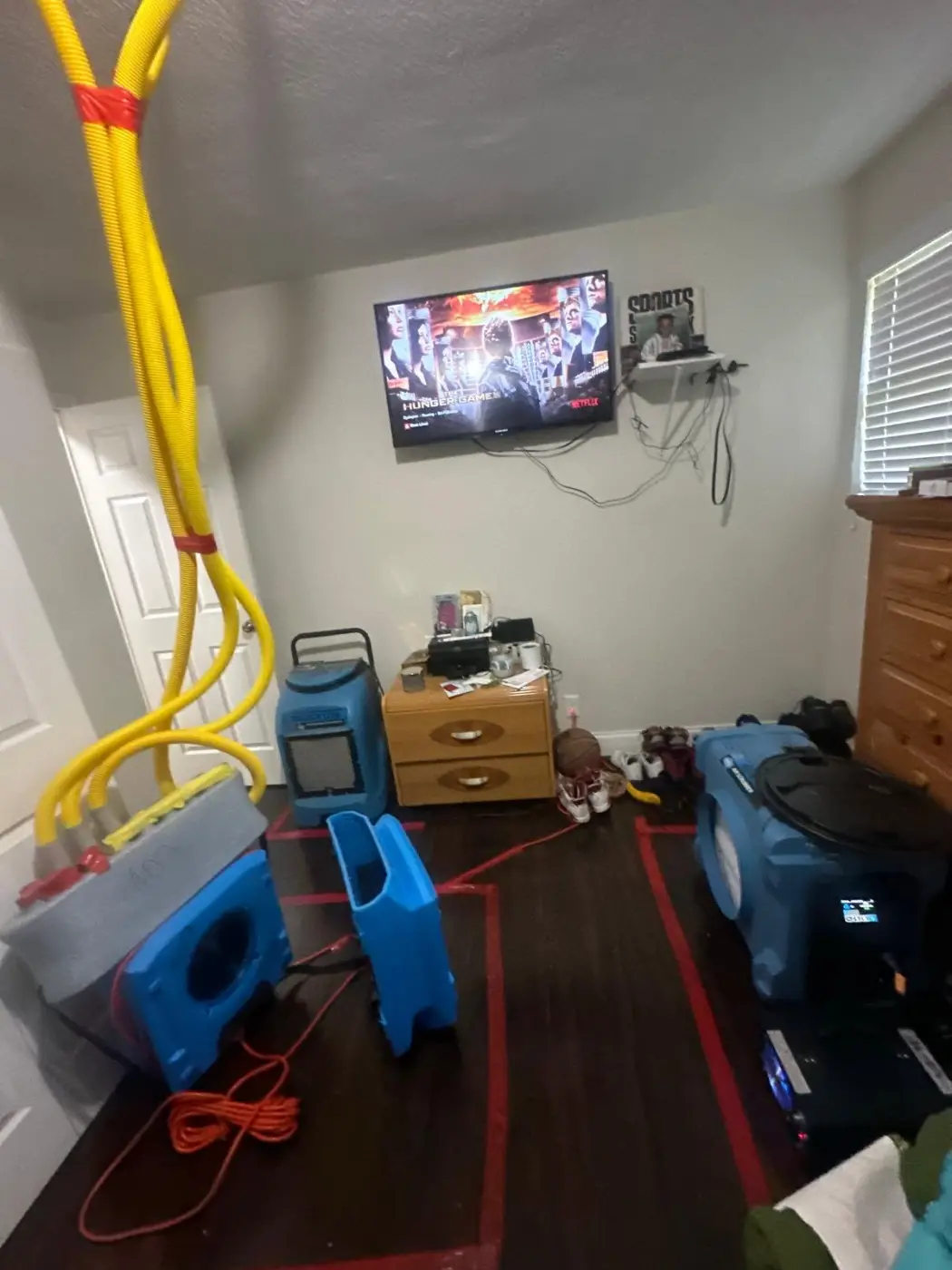
What is water damage restoration?
Water damage restoration is the process of removing water from a building, drying the structure to its normal moisture level, and cleaning or removing materials the water ruined, so the home can be safely repaired. It starts with extraction and ends with moisture readings that prove the framing, subfloor and drywall are dry. Everything in between depends on where the water came from, how long it sat and what it soaked into.
It is a separate job from the rebuild. Restoration gets the house back to a clean, dry, documented starting point. Replacing drywall, flooring and cabinets comes after, once the readings say it is safe to close things up.
Why does speed matter so much?
Water moves fast and keeps moving after the leak stops. In the first hour it spreads across floors and wicks up drywall. By the end of the first day, carpet pad is saturated, wood floors start to cup and particleboard swells. Within 24 to 48 hours, mold can begin growing on wet materials, and water from a clean pipe starts to pick up contamination as it sits.
That is why the first visit focuses on emergency water removal: getting standing water out with pumps and extraction wands before it soaks deeper. Every hour saved at the start usually means less tear-out at the end.
What causes water damage in Charleston homes?
The Kanawha Valley has its own mix of risks:
- River and creek flooding. Low-lying streets near the Kanawha and Elk rivers, and homes along smaller creeks, take on water when rivers rise after heavy rain. This is storm and flood damage, and floodwater is treated as contaminated.
- Burst and frozen pipes. Winter cold snaps freeze supply lines in exterior walls and crawl spaces. Older galvanized pipes corrode and split. See burst pipe water damage.
- Basement seepage. Hillside runoff and high groundwater push water through block foundation walls and floor cracks. Flooded basement cleanup is one of the most common calls in the valley.
- Appliance failures. Water heaters, washing machine hoses, dishwashers, ice-maker lines and toilet supply lines fail without warning. Our guide to common causes of water damage in Charleston covers each one.
- Slow leaks overhead. Roof leaks and bathroom leaks can soak a ceiling for weeks. The result is ceiling and drywall water damage that is only found when the ceiling stains or sags.
- Sewer backups. Heavy rain can overwhelm sewer lines and push sewage up through basement floor drains.
How does the restoration process work?
- Inspection and moisture mappingThe source is found and stopped, and moisture meters and thermal cameras map where the water went, including inside walls and under floors.
- Water extractionStanding water is pumped out and carpets are extracted with truck-mounted or portable units. This is the single biggest step in limiting damage.
- Removal of unsalvageable materialsWet carpet pad, swollen baseboards, saturated insulation and drywall below the waterline are removed when they cannot be dried or were exposed to contaminated water.
- Structural dryingAir movers and dehumidifiers are placed to dry the framing, subfloor and walls. Wall cavities may be dried through small holes, and hardwood floors with drying mats.
- Daily monitoringMoisture readings are taken and logged each day, and equipment is moved as areas dry.
- Final readings and documentationDrying is complete when readings match unaffected materials. Photos, readings and the scope of work are handed over to you.
Most of the drying itself is covered in more detail on the water extraction and drying page.
Clean, gray and black water
The IICRC S500 standard groups water damage into three categories, and the category decides how the job is handled.
| Category | Typical source | How it is handled |
|---|---|---|
| Category 1: clean | Supply line, faucet, water heater | Often dried in place if caught within a day or two |
| Category 2: gray | Washing machine or dishwasher discharge, toilet overflow without waste | Cleaned and disinfected; carpet pad and some porous materials removed |
| Category 3: black | Sewage, river and creek floodwater | Porous materials removed; disinfection and protective gear required |
Water can also get worse with time. A clean-water leak that sits for several days in a warm house can be treated as Category 2 or 3 because of bacterial growth.
What has to be removed and what can be dried?
Some materials dry well and some do not. A good provider explains each decision rather than tearing everything out.
- Usually dried in place (clean water, caught early): framing, subfloors, plaster walls, many hardwood floors, and carpet itself (the pad underneath is usually replaced).
- Usually removed: carpet pad, laminate and vinyl plank flooring with water under it, particleboard cabinet bases, wet fiberglass insulation, and drywall that has wicked water up from the floor.
- Always removed after black water: carpet, pad, drywall and insulation that the floodwater touched.
Older Charleston homes with plaster walls, plank subfloors and hardwood floors need a slower, more careful drying plan than newer homes with drywall and engineered flooring. Done right, a lot of that original material can be saved.
Signs of hidden water damage
Not all water damage is obvious. Call for an inspection if you notice:
- A musty smell that does not go away
- Stains, bubbling paint or soft spots on walls and ceilings
- Floors that are cupping, buckling or feel spongy
- A water bill that jumped with no change in use
- Mold spots along baseboards or in closets on exterior walls
Hidden moisture inside walls and under floors is the main cause of mold after flooding and slow leaks, so finding it early matters.
What affects the cost?
| Factor | Why it matters |
|---|---|
| Water category | Clean water costs less to handle than sewage or floodwater |
| Area affected | More square footage and rooms means more equipment and labor |
| Time since the damage | Longer exposure means more removal and higher mold risk |
| Materials | Plaster, hardwood and finished basements take longer to dry |
| Access | Crawl spaces, attics and upper floors take more setup |
A firm price is only possible after an inspection and moisture readings.
Water damage help across Kanawha County
Calls are taken from homes and businesses in all 14 Charleston-area ZIP codes. That includes river-level neighborhoods like Kanawha City, Malden and Rand and Marmet, older homes on the West Side and in the East End, and hillside basements in South Hills and Spring Hill. Water damage is one part of the water, fire and mold damage restoration in Charleston, WV that this site covers.
Call to be connected with an independent local provider who can start extraction and drying.
What can you do before help arrives?
- Stop the water. Shut the main valve or the valve behind the fixture.
- Cut power to wet areas if you can reach the breaker panel without standing in water.
- Move what you can to a dry floor, and put foil or wood blocks under furniture legs.
- Document everything with photos and video before anything is removed.
- Stay out of rooms with sagging ceilings and do not use a household vacuum on water.
Our step-by-step guide to what to do immediately after water damage goes into more detail, and how long water damage restoration takes covers the timeline.
Water damage restoration FAQs
How long does water damage restoration take?
Extraction happens on the first visit. Drying usually takes three to five days for clean-water losses, and longer for hardwood floors, plaster, concrete or contaminated water. Drying is finished when moisture readings say so, not on a fixed schedule.
Can I dry water damage myself with fans?
Box fans move surface air but do not pull water out of framing, subfloors or wall cavities, and they cannot measure when things are actually dry. Moisture left inside walls is a common cause of mold weeks later.
Will my wood floors be ruined?
Not always. Solid hardwood can often be saved with specialized drying mats if drying starts quickly. Laminate and engineered flooring with water under it usually has to come up.
Do I need to leave my home during drying?
Usually not for clean-water losses, though the equipment is loud and runs day and night. Sewage backups, large floods and mold contamination can make some or all of the home unsafe until cleaned.
Is help available for businesses and rental properties?
Yes. Offices, shops, apartments and rental homes across Charleston and Kanawha County can call the same number.