

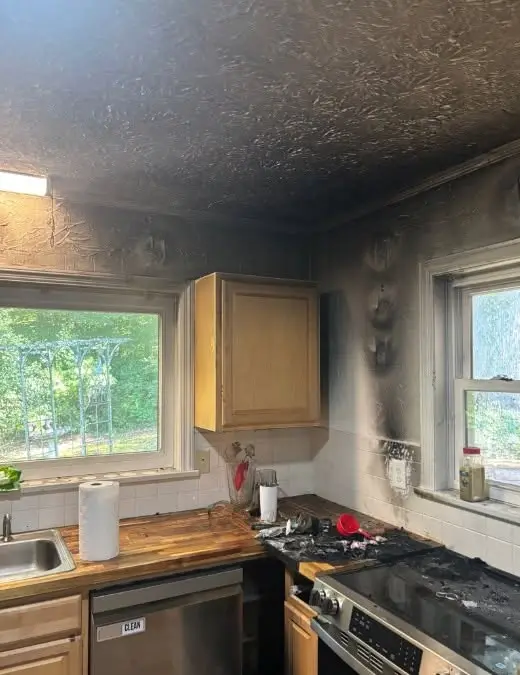
What is soot removal?
Soot removal is the cleaning of carbon residue left by incomplete combustion from walls, ceilings, fixtures, contents and HVAC systems, using dry and wet cleaning methods matched to the type of soot and the surface. Soot is fine, oily and acidic. It clings to surfaces, smears easily, and starts discoloring and corroding materials within hours of a fire.
Soot is the heavier, visible deposit that builds up closest to the fire, on ceilings and around doorways. Lighter residue spread through the rest of the house is covered in smoke damage cleanup.
Why the type of soot matters
Different fires produce different soot, and each behaves differently when cleaned:
Dry soot
From fast, hot fires burning natural materials like wood and paper. It is powdery and sits on the surface, which makes it the easiest to remove. Dry sponging and HEPA vacuuming pick it up before any wet cleaning.
Wet soot
From slow, smoldering fires burning plastics, rubber, foam and synthetic fabrics. It is sticky, smeary and has a strong smell. Wiping it spreads it. It usually needs degreasing cleaners and several passes, and porous materials stained by it often have to be sealed or replaced.
Protein residue
From kitchen fires where food burned. It can be almost invisible, a yellowish film on walls, cabinets and ceilings, but it carries a strong, lingering odor. It needs enzyme and degreasing cleaners. See kitchen fire cleanup.
Fuel oil soot
From oil furnace malfunctions, called puff-backs, where unburned oil ignites in the firebox and blows soot through the ductwork. It is dense, oily and can coat an entire house from a single event. Some older homes in the valley still heat with oil.
How soot removal works
- Test the surfaceA small area is tested to find the soot type and how the surface reacts to cleaning.
- Contain and filterRooms are separated and HEPA air scrubbers run to capture airborne particles.
- Dry removalDry chemical sponges and HEPA vacuums lift loose soot without grinding it in.
- Wet cleaningDegreasers and cleaners suited to the soot and the surface remove the remaining film.
- Seal if neededWalls and ceilings with set-in stains are sealed with a stain- and odor-blocking primer before painting.
- Clean the HVACDuctwork and the air handler are cleaned so soot does not keep circulating.
What surfaces can be saved?
| Surface | Usually | Notes |
|---|---|---|
| Painted walls and ceilings | Cleaned, then sealed and repainted if stained | Heavy wet soot may need full sealing |
| Kitchen cabinets | Cleaned inside and out | Laminate can blister with heat |
| Brick and stone | Cleaned with specialized methods | Porous surfaces may need repeated passes |
| Metal fixtures | Cleaned and polished early | Soot corrodes chrome and brass if left |
| Grout and tile | Cleaned; grout may stain permanently | Early cleaning makes a big difference |
| Acoustic ceilings | Often replaced | Popcorn texture holds soot deeply |
Health and safety
Soot particles are very small and can be inhaled deeply into the lungs. They can carry chemicals from burned plastics and other materials. Children, older adults, pregnant people and anyone with asthma or heart and lung conditions should avoid soot-covered areas until they are cleaned. Wear gloves and an N-95 respirator if you need to go in to retrieve belongings.
Do not try to wipe soot off walls or ceilingsWiping smears the oily residue into paint and texture, turning a cleanable deposit into a permanent stain.
Soot removal after a furnace puff-back
A puff-back often looks like a fire even though there were no flames in the living space: black, oily soot on every surface, sometimes in lines along walls where air currents carried it. The furnace has to be repaired and inspected by an HVAC technician before restarting.
Help across the county
Soot cleanup is part of fire and smoke damage restoration, along with smoke odor removal. Calls come from across the area, including Malden and Rand, Marmet, North Charleston and Spring Hill. This is one of the restoration services across the Kanawha Valley on this site.
Call to be connected with an independent local provider for soot removal.
Soot removal FAQs
Can soot stains be removed completely?
Dry soot on sealed surfaces usually cleans off completely. Wet soot and stains on porous surfaces often leave some discoloration, which is sealed with a stain-blocking primer before repainting.
Is soot harmful to breathe?
Yes. Soot particles are fine enough to reach deep into the lungs and can carry chemicals from burned materials. Limit time in soot-covered rooms and keep vulnerable people away.
How long does soot removal take?
A small area can be cleaned in a day. A whole house with heavy soot, contents and ductwork can take a week or more.