

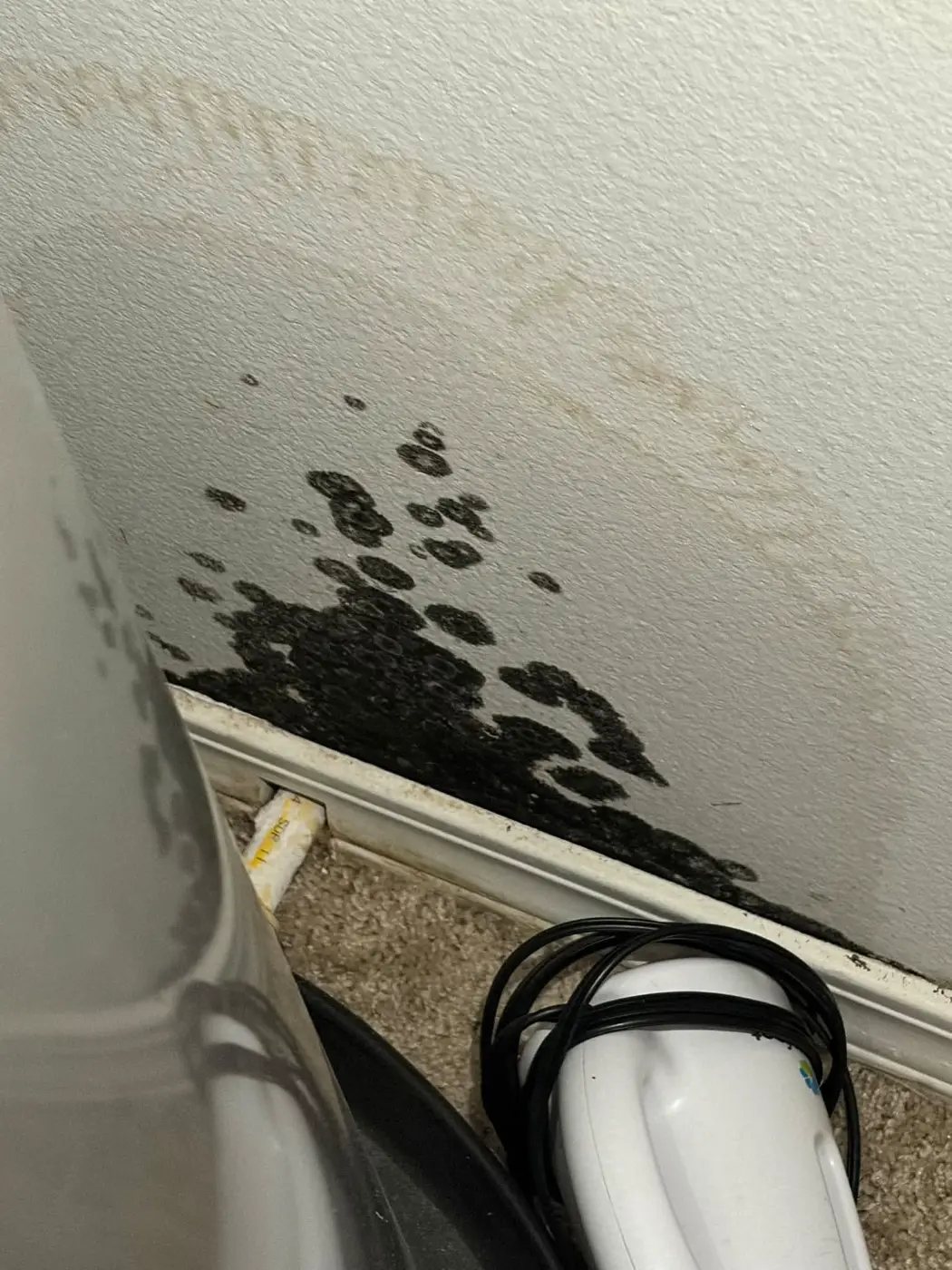
How fast does mold grow after a flood?
Mold can begin growing on wet drywall, wood, carpet and insulation within 24 to 48 hours after flooding, and visible growth often appears within a few days to two weeks if materials are not removed or dried. Floodwater makes it worse: it carries organic material and bacteria, leaves silt behind, and often sits for a long time before cleanup can start.
Post-flood mold is not only a problem in the flooded rooms. Humidity rises throughout the house, and mold can appear on furniture, clothing and walls that never touched the water.
Why flooding and mold go together
- Porous materials stay wet. Drywall, insulation, carpet pad and wood soak up floodwater and hold it.
- Humidity spikes. A flooded basement or first floor raises humidity in the whole house.
- Cleanup is delayed. After a regional flood, many homes wait days for help, giving mold time to start.
- Hidden cavities. Water gets into wall cavities and under flooring, where it cannot dry on its own.
- Contamination. River and creek floodwater leaves silt and organic matter that mold feeds on.
Preventing mold after a flood
If you are in the first days after a flood, these steps matter most:
- Get standing water out as quickly as possible. See emergency water removal.
- Remove wet porous materials. After floodwater, drywall, insulation, carpet and pad the water touched are removed, not dried.
- Dry the structure with dehumidifiers and air movers until moisture readings are normal. See water extraction and drying.
- Clean and disinfect everything the water touched.
- Throw away mattresses, upholstered furniture, stuffed toys and paper that sat in floodwater, after photographing them.
- Keep humidity down in the whole house with dehumidifiers and air conditioning.
If mold is already growing
- Assess the extentVisible growth and hidden moisture are mapped, including inside walls and under floors.
- ContainAffected areas are sealed off and put under negative air pressure with HEPA filtration.
- RemoveMoldy drywall, insulation, flooring and other porous materials are removed and bagged.
- Clean framing and surfacesStuds, joists, subfloors and concrete are HEPA-vacuumed, scrubbed and treated.
- Dry completelyThe structure is dried to normal readings before anything is rebuilt.
- VerifyMoisture readings, and clearance testing if needed, confirm the area is ready to close up.
Protect yourself during flood cleanupWear an N-95 respirator, gloves and eye protection when handling moldy materials. People with asthma, allergies or weakened immune systems should stay out of moldy areas.
Mold after other kinds of water damage
The same rules apply after any water event that was not dried quickly: a burst pipe found days later, a sewage backup, a roof leak or a slow leak behind a wall. If materials stayed wet for more than a day or two, check for mold. Basement mold and crawl space mold are especially common after water that was never fully dried.
Keeping records of the cleanup
Write down the dates the water came in and went out, when wet materials were removed, and when drying equipment ran. Keep photos from before, during and after cleanup, and copies of the moisture readings. These records show the home was dried properly, and they help if mold questions come up later, including when you sell the house.
Flood-prone areas around Charleston
Homes near the Kanawha and Elk rivers and along local creeks see the most post-flood mold, including Kanawha City, Marmet, Malden and Rand, Sissonville and the river side of the West Side. Mold after flooding is part of mold removal and goes hand in hand with storm and flood damage cleanup. For every type of damage, see water, fire and mold cleanup in Charleston.
Call to be connected with an independent local provider for mold removal and drying.
Mold after flooding FAQs
Can I prevent mold if I dry everything with fans?
Fans help with surface drying but cannot dry wall cavities, subfloors and framing reliably. After floodwater, porous materials also need to be removed, not just dried.
Is it safe to stay in a flooded home with mold?
It depends on how much mold there is and the health of the people living there. Large amounts of mold, or anyone with asthma, allergies or a weakened immune system, are good reasons to stay elsewhere until it is removed.
How do I know if mold is inside my walls after a flood?
A musty smell, staining at the bottom of walls, or high moisture readings are signs. A mold inspection with moisture meters and thermal imaging can confirm it.