

What is crawl space mold removal?
Crawl space mold removal is the cleaning and treatment of mold on the wood framing, subfloor and insulation in a crawl space, together with the moisture control, such as a vapor barrier, drainage and ventilation changes, needed to stop it coming back. Most crawl space mold grows on floor joists, the underside of the subfloor and sill plates, where wood stays damp from the ground and the air.
Crawl space air moves up into the house. As warm air rises and escapes through the upper floors, air is pulled up from below. That means mold, odor and moisture in the crawl space affect the air you breathe upstairs.
Why crawl spaces get moldy
- Bare dirt floors. Exposed soil releases moisture into the crawl space constantly. Many older homes in the valley have dirt or partially covered floors.
- Humid summer air. Vented crawl spaces pull in warm, humid summer air, which condenses on cool wood and ductwork below the house.
- Poor drainage. Water from gutters, downspouts and hillside runoff can pool in or around the crawl space.
- Plumbing leaks. Supply and drain lines run through crawl spaces, and leaks there go unnoticed.
- Past flooding. Crawl spaces that took on water during a flood often stay wet for a long time afterward.
- Sagging or wet insulation. Fiberglass insulation between joists traps moisture against the wood when it gets damp.
Signs of crawl space mold
- A musty smell on the first floor, especially in summer or after rain
- White, gray or black growth on joists and the underside of the subfloor
- Wet or falling insulation under the house
- Soft or springy floors
- Condensation on ducts, pipes or the vapor barrier
- Cupping hardwood floors above the crawl space
How crawl space mold removal works
- InspectMoisture readings on joists and subfloor, the condition of the vapor barrier and insulation, and signs of standing water or leaks are checked.
- Remove debris and wet insulationDamaged insulation, old vapor barrier and debris are removed and bagged.
- Clean the framingMold is removed from joists and subfloor by HEPA vacuuming, scrubbing, sanding or media blasting.
- TreatAn antimicrobial and, in some cases, a mold-resistant coating are applied to the cleaned wood.
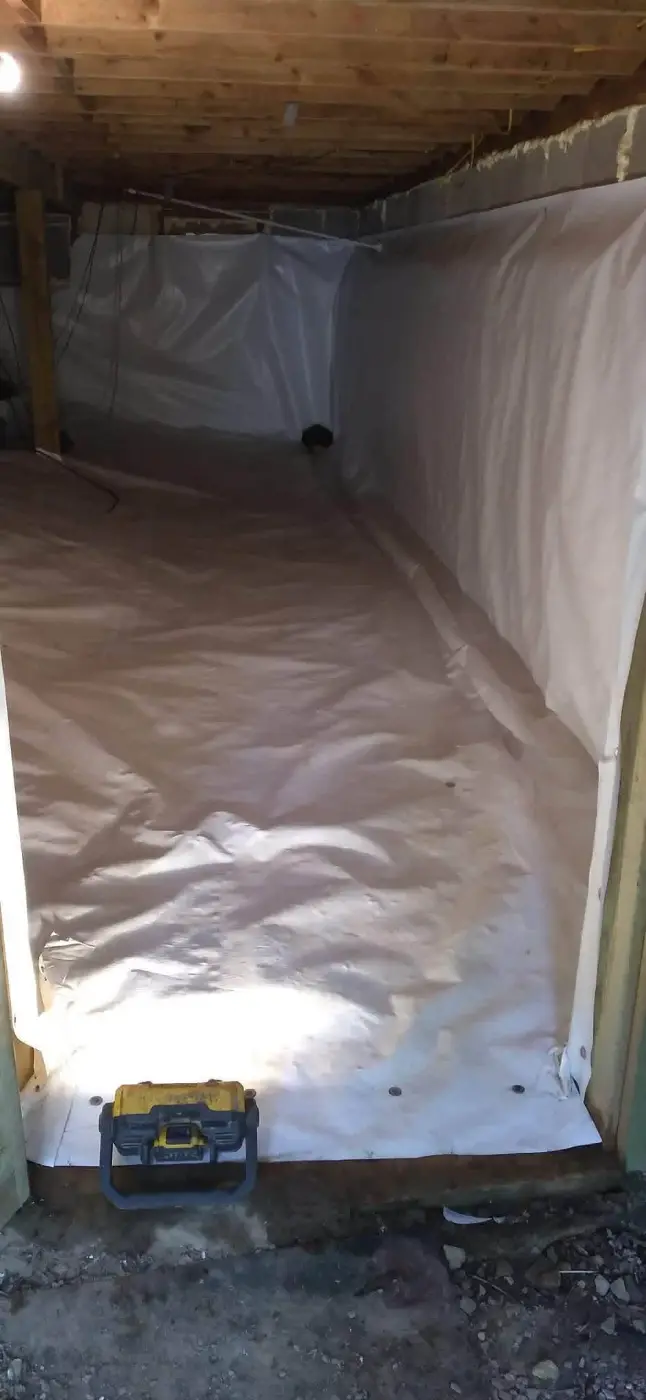
- Control moistureA heavy vapor barrier is laid over the soil, drainage problems are addressed, and a dehumidifier may be added.
- ConfirmMoisture readings confirm the framing is dry and stays dry.
Vapor barriers and encapsulation
| Option | What it is | When it fits |
|---|---|---|
| Vapor barrier | Heavy plastic sheeting over the dirt floor | Most crawl spaces with dirt floors |
| Full encapsulation | Sealed plastic on the floor and walls, vents closed, often with a dehumidifier | Very damp crawl spaces, or homes with ongoing mold or moisture problems |
| Drainage | Interior drain and sump to remove water that collects | Crawl spaces that get standing water |
A vapor barrier alone is often enough for a crawl space that is damp but not wet. Crawl spaces with standing water need drainage first.
Crawl spaces can be hazardousTight spaces, wiring, sharp debris, animals and mold spores make crawl spaces risky. Wear a respirator and protective clothing if you go in, and do not disturb large areas of mold.
Crawl space mold in Charleston homes
Crawl spaces are common under older and rural homes around the valley, including many houses in Sissonville, Malden and Rand, North Charleston and Cross Lanes. Homes along creeks and in low areas see more moisture after storms. Crawl space mold removal is part of mold removal and is often found during a mold inspection for an odor upstairs. For water, fire and mold damage anywhere in town, see Charleston damage restoration.
Call to be connected with an independent local provider for crawl space mold removal.
Crawl space mold FAQs
Is crawl space mold dangerous?
It can affect indoor air quality because crawl space air moves up into the house. People with allergies or asthma are most likely to notice symptoms.
Will a vapor barrier get rid of mold?
No. A vapor barrier helps prevent new growth by reducing moisture, but existing mold on joists and subfloor still has to be cleaned.
Should crawl space vents be open or closed?
In humid climates, open vents often bring in more moisture than they remove in summer. Closed, encapsulated crawl spaces with a dehumidifier stay drier, but the right choice depends on the house.
How long does crawl space mold removal take?
Usually one to three days, depending on the size of the crawl space and how much cleaning and moisture work is needed.