

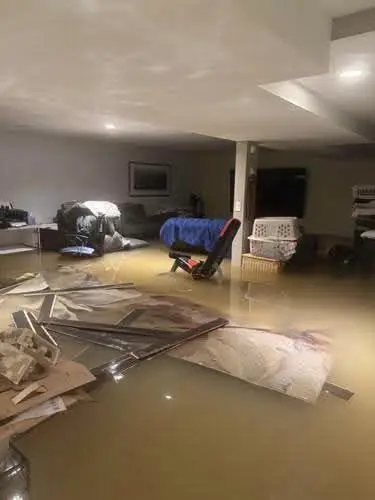
What is storm and flood damage cleanup?
Storm and flood damage cleanup is the removal of floodwater, mud and debris from a building, the tear-out of porous materials the water reached, cleaning and disinfecting every affected surface, and drying the structure so it can be rebuilt safely. It also covers storm damage from wind-driven rain, roof leaks after high winds and trees through the roof.
Floodwater from rivers, creeks and surface runoff is classed as Category 3, or black water, under the IICRC S500 standard. It can carry sewage, bacteria, agricultural and lawn chemicals, fuel and silt. That classification changes the job: drywall, insulation, carpet and pad that the water touched are removed, not dried in place.
Flooding in the Kanawha Valley
Charleston sits where the Elk River meets the Kanawha, with smaller creeks running out of the hills on every side. Heavy rain can flood homes in a few different ways:
- River flooding on low-lying streets near the Kanawha and Elk, when rivers rise over several hours or days.
- Flash flooding along creeks and hollows, where a hard rain can turn a small stream into fast-moving water in minutes. Communities in narrow valleys, such as parts of Malden, Marmet, Sissonville and the areas along the Elk upstream of Charleston, are most exposed.
- Surface runoff on hillside lots, where water runs off the slope and into basements and lower floors.
- Storm sewer and sanitary sewer backups when heavy rain overwhelms the lines.
The June 2016 floods were a reminder of how fast this can happen in West Virginia, when heavy rain caused deadly flooding across the southern part of the state, including communities along the Elk River in Kanawha County.
How flood cleanup works
- Safety firstPower is shut off at the panel by a qualified person, gas appliances are checked, and the structure is checked for damage before work begins.
- Pump out water and mudWater is pumped out, and mud and silt are shoveled and squeegeed out before they dry hard.
- Remove contaminated materialsDrywall and plaster are cut out above the waterline, and wet insulation, carpet, pad and porous flooring are removed.
- Clean and disinfectStuds, subfloors, concrete and everything left in place are washed and treated with an antimicrobial.
- Dry the structureAir movers and dehumidifiers dry framing and concrete to normal moisture levels, which can take a week or more after a flood.
- Document the lossPhotos, moisture readings and an itemized list of removed materials are kept on record.
Floodwater is dangerousDo not walk through moving water, and stay out of flooded buildings until power is off. Floodwater can hide sharp debris, open drains and live electrical current.
Storm damage without flooding
Not every storm loss is a flood. High winds can lift shingles, tear off flashing or drop a tree on the roof, letting rain pour into attics and ceilings. The first step is to stop more water getting in with a tarp or emergency board-up, then extract and dry. Water that came down through a ceiling is covered on the ceiling and drywall water damage page.
Knowing your flood risk
You can look up your flood zone on FEMA’s Flood Map Service Center, and our guide to preparing your home for flooding in Kanawha County covers what to do before the water comes.
Mold after a flood
Mold is the biggest risk in the weeks after a flood. Wet drywall, wood and insulation can start growing mold within 24 to 48 hours, and flooded homes often stay wet for days before cleanup starts. Removing contaminated materials quickly and drying everything to normal readings is what prevents it. If it is already growing, see mold after flooding, and our guide to recovering after a Kanawha River flood walks through the weeks after.
Where flooding hits hardest
River-level streets in Kanawha City, Marmet and Malden and Rand, homes along the Elk on the West Side, and creek valleys around Sissonville all see flood calls after heavy rain. Hillside basements take on runoff in South Hills and Spring Hill. Storm and flood cleanup is part of water damage restoration, and often leads straight into flooded basement cleanup. For every type of damage, see water, fire and mold cleanup in Charleston.
Call to be connected with an independent local provider for flood cleanup and drying.
Storm and flood damage FAQs
Can drywall be saved after a flood?
Not after river, creek or surface floodwater. Drywall and insulation the water touched are removed, usually with a cut at least 12 to 24 inches above the waterline, because they absorb contaminated water and cannot be reliably cleaned.
How long does it take to dry a home after a flood?
Usually a week or more after the water and wet materials are out, depending on how long the water stood, how high it rose and the weather. Drying ends when moisture readings say the framing and concrete are dry.
What should I throw away after a flood?
Food, medicine, cosmetics, stuffed toys, mattresses and upholstered furniture that sat in floodwater usually cannot be made safe. Photograph everything before throwing it out.