The short answer
After a house fire: wait for the fire department to say it is safe, get the building secured with board-up and tarps, keep the HVAC off, do not wipe soot, throw out food and medicine that were exposed, document everything, and get soot cleanup and drying started within days. Smoke and water damage both get worse with time.
Before you go back in
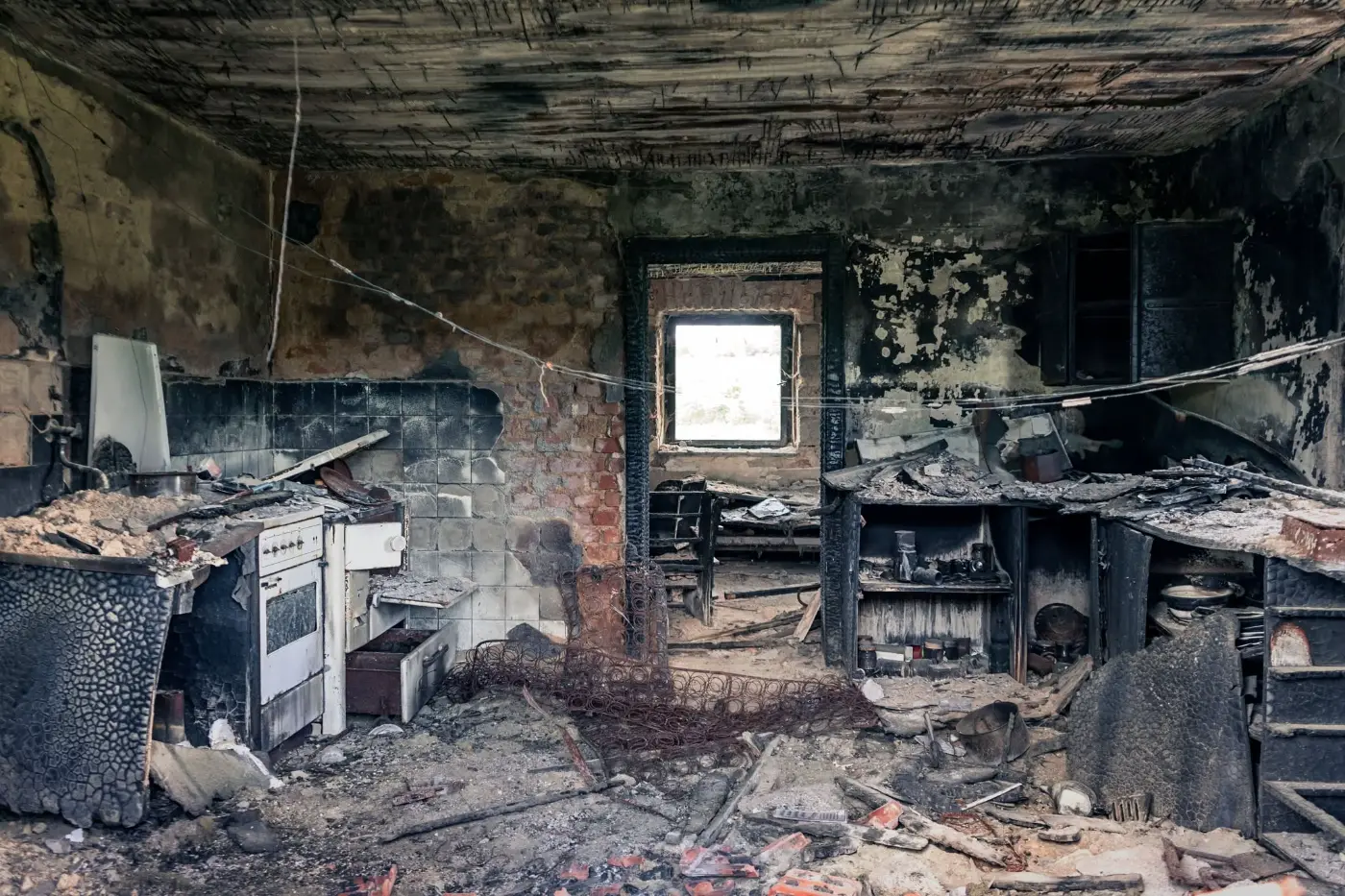
The fire department decides when the building can be entered. Even after a small fire, there can be weakened floors, hidden hot spots and damaged wiring. Ask the fire crew:
- Is it safe to enter, and which areas should we stay out of?
- Have the utilities been shut off, and who turns them back on?
- Can we remove anything today?
Get a copy of the fire report, or the incident number. You will need it later.
If gas or electricity was shut off, do not turn them back on yourself. The utility company or a licensed electrician needs to check the systems first.
The first 48 hours
- Secure the propertyBroken windows, doors and roof openings are covered the same day with plywood and tarps. This keeps out rain, animals and intruders.
- Keep the air system offRunning the HVAC pulls soot through the ducts and into rooms that were clean.
- Document the damagePhotograph and video every room, damaged belongings and the outside of the house before anything is moved.
- Remove what you needMedications, documents, glasses, phones and valuables, if the fire crew says you can.
- Throw out exposed foodFood, drinks, medicine and cosmetics exposed to heat, smoke or firefighting water should be discarded.
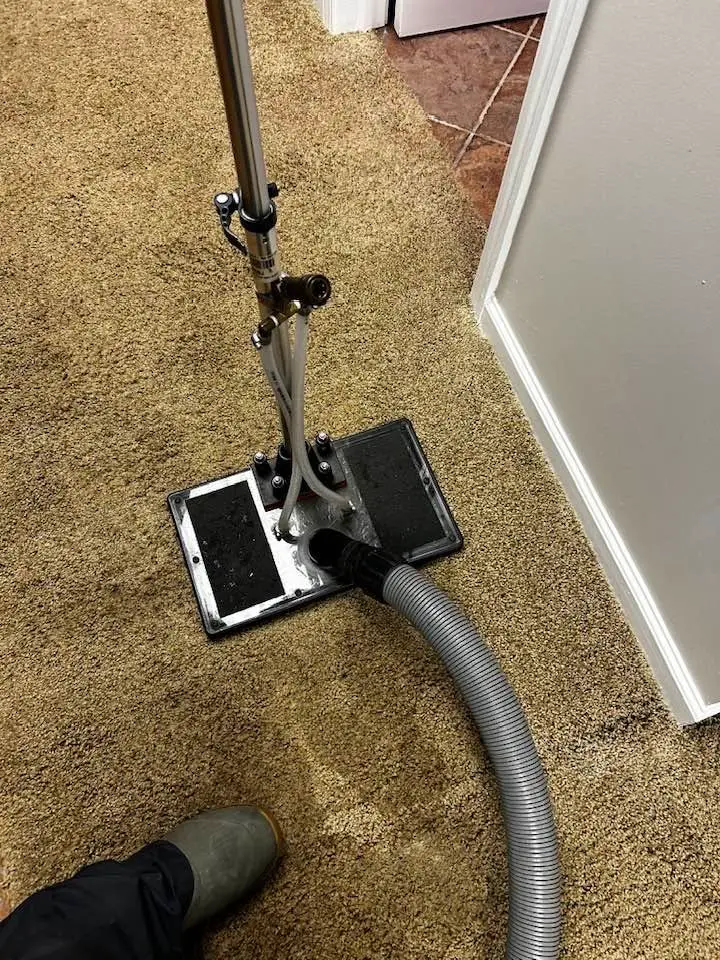
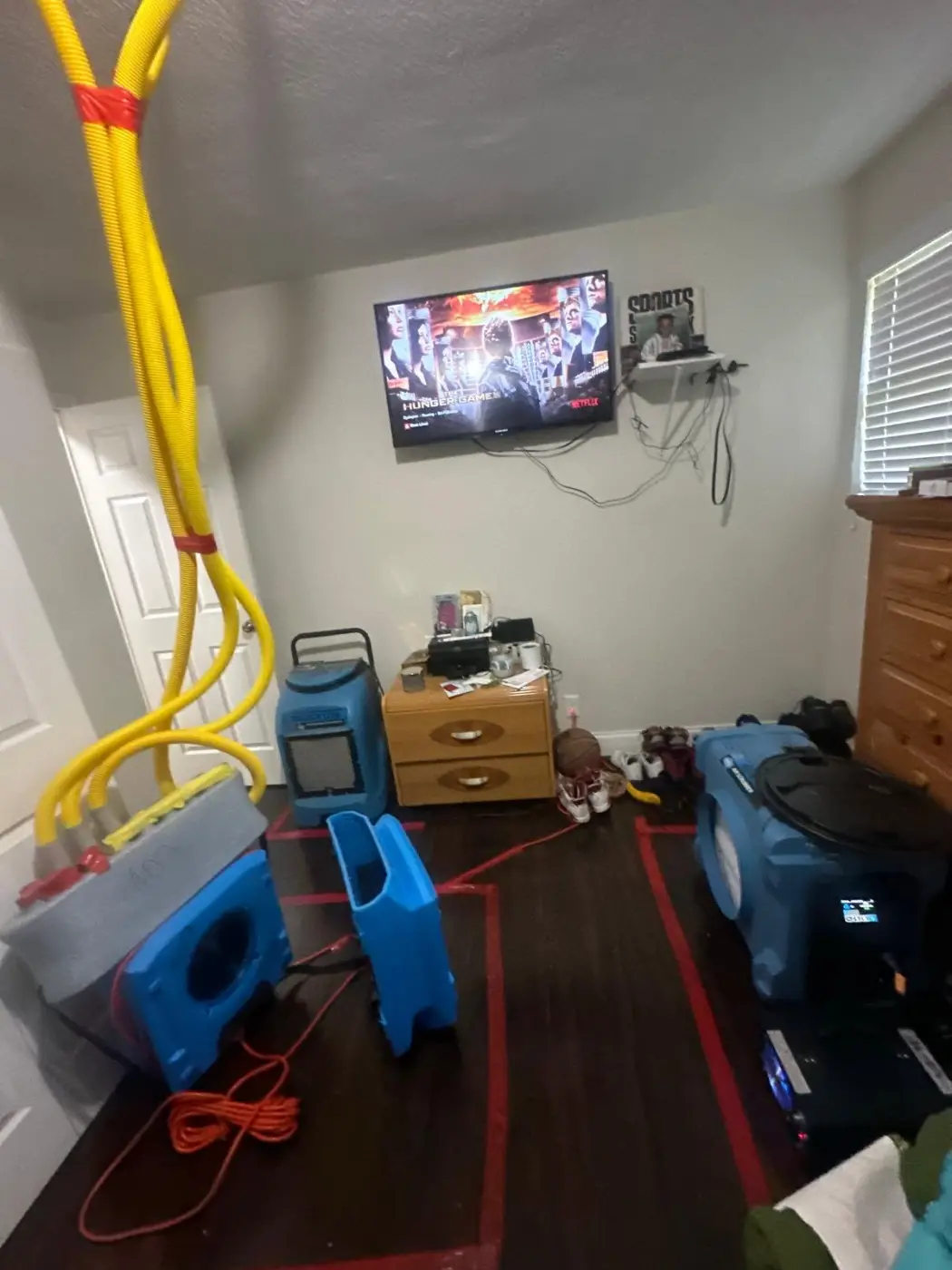
- Start dryingFirefighting water in floors and walls needs extraction and drying like any other water damage.
Emergency board-up covers what securing the house usually involves.
What not to do
| Don’t | Why |
|---|---|
| Wipe soot off walls, ceilings or upholstery | It smears into stains that are harder to remove |
| Run the furnace or air conditioning | It spreads soot through the ductwork |
| Use electrical appliances exposed to heat or water | They can short or fail |
| Wash clothing in your machine right away | Heavy soot can set into fabric; it often needs specialized cleaning |
| Paint over smoke stains | Odor and stains bleed through new paint |
| Leave wet materials for later | Firefighting water can lead to mold within days |
Why speed matters after a fire
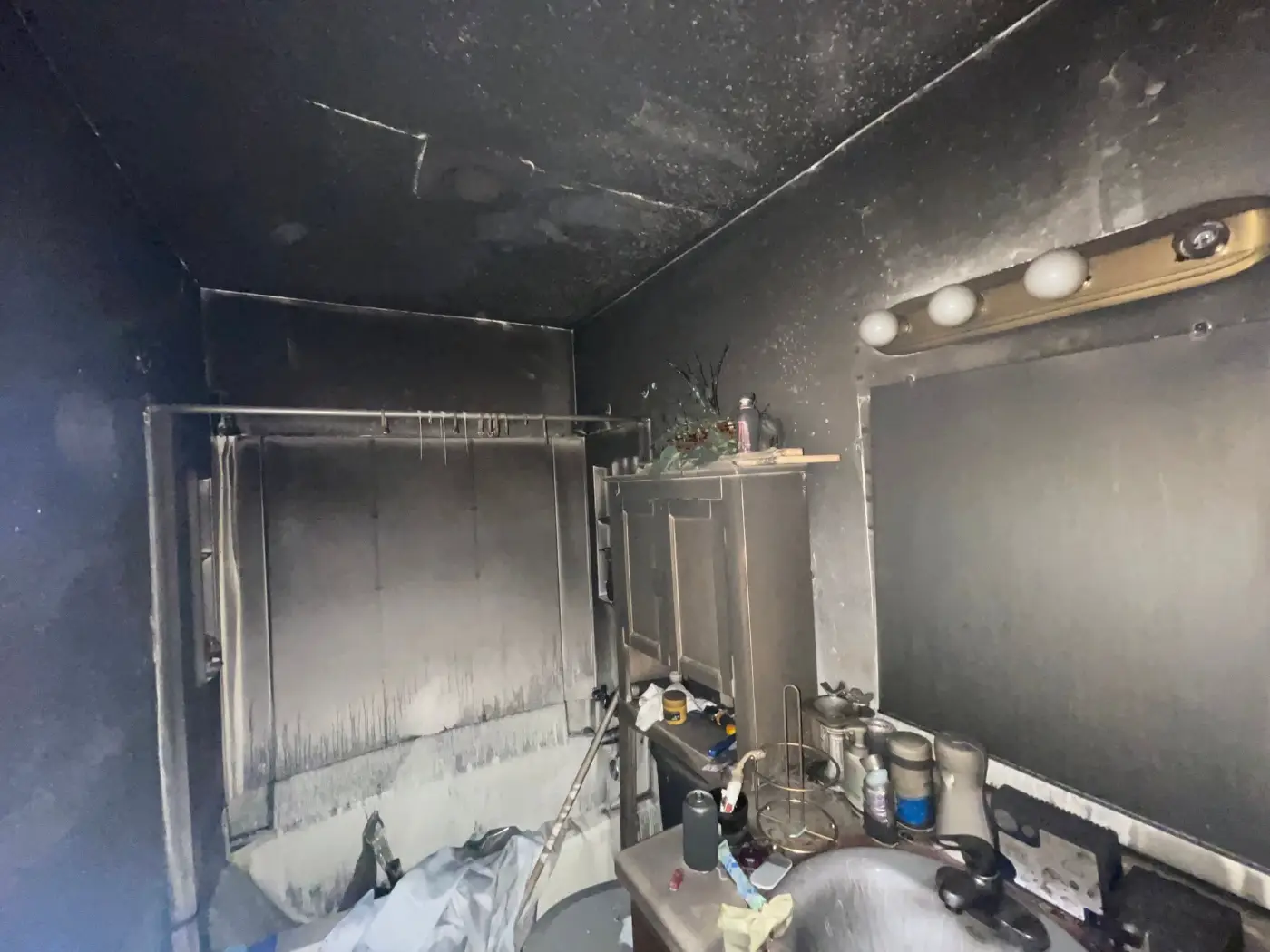
Soot is not just dirt. It is acidic and keeps working on surfaces after the fire is out:
- Within hours, plastics and appliance surfaces can yellow, and porous stone and grout absorb residue.
- Within days, painted walls discolor, metal tarnishes and rusts, and wood finishes become stained.
- Within weeks, glass can etch, and odor settles into framing, insulation and ductwork.
The type of smoke matters too. A hot, fast fire leaves dry soot that can often be vacuumed. A smoldering fire leaves greasy, smeary soot. A kitchen fire leaves a nearly invisible protein residue with a strong, lingering smell. Each needs a different cleaning method; see soot removal.
Protecting your belongings
- Separate items that are clearly destroyed from those that may be cleaned, but photograph both.
- Many hard items, dishes, metal and hard furniture clean well.
- Clothing and fabric often come clean with specialized laundering or dry cleaning.
- Upholstered furniture and mattresses depend on how much smoke they absorbed.
- Electronics exposed to smoke should be cleaned and checked before use; soot inside them can cause failures later.
- Paper, photographs and documents can sometimes be dried or restored by specialists.
Smoke odor and soot cleanup
The cleanup usually moves from the top down: ceilings, then walls, then floors and contents, with HEPA vacuuming, specialized sponges and cleaners chosen for the type of soot. Odor removal comes after cleaning, because deodorizing does not work while the residue that causes the smell is still there. How smoke odor is removed from a house explains that part, and fire and smoke damage restoration covers the full process.
Paperwork and money
If you have homeowners or renters insurance, report the loss quickly and write down the claim number. Ask about additional living expenses if you cannot live in the house, and keep every receipt. Make a list of damaged belongings room by room. The American Red Cross in West Virginia can often help with immediate needs such as lodging, food and clothing after a home fire.
A note on small fires
A small stovetop fire that never spread can still leave protein residue on every surface in the house and a smell that comes back on humid days. It is worth having the kitchen and nearby rooms checked even when the visible damage is small; see kitchen fire cleanup.
Call to be connected with an independent local provider for board-up and soot cleanup.
After a house fire FAQs
How soon should fire cleanup start?
As soon as the building is released by the fire department. Soot damage to surfaces and water damage from firefighting both get worse over the first days.
Can I stay in my house after a small fire?
Sometimes, if the fire was contained to one area and utilities are safe. Smoke residue can irritate lungs, so people with asthma, young children and older adults should stay elsewhere until cleaning is done.
Why does my house still smell like smoke after cleaning?
Smoke particles settle into insulation, framing, ductwork and porous materials. If the source is not cleaned, removed or sealed, odor comes back, especially on humid days.