The short answer
A standard homeowners policy usually covers sudden and accidental water damage from inside the home, such as a burst pipe or a failed water heater. It usually does not cover flooding from rising surface water, which needs separate flood insurance, or damage from long-term leaks and lack of maintenance. Sewer and drain backups are often excluded unless you added a backup endorsement. Your own policy wording is what decides it, so read the declarations page and exclusions, and ask your agent.
This guide explains common patterns. It is not legal or insurance advice, and policies vary by company.
What is usually covered
| Situation | Usually covered? | Why |
|---|---|---|
| Pipe bursts in a wall in January | Usually yes | Sudden and accidental |
| Washing machine supply hose splits | Usually yes | Sudden and accidental |
| Water heater tank fails | Usually the water damage, not the heater | The resulting damage is covered; the worn-out appliance often is not |
| Roof leaks during a storm after wind damage | Usually yes | Caused by a covered peril |
| Water used to put out a house fire | Usually yes | Part of the fire loss |
What is usually not covered
| Situation | Usually covered? | Why |
|---|---|---|
| Kanawha River or creek floodwater entering the house | No, needs flood insurance | Flood is a standard exclusion |
| Groundwater seeping through the basement wall | Usually no | Surface and groundwater exclusions |
| Slow leak under a sink for months | Usually no | Treated as wear, maintenance or repeated seepage |
| Sewer or drain backup | Only with an endorsement | Excluded unless added |
| Sump pump failure | Only with an endorsement, often the same one | Excluded unless added |
| Mold from a long-term leak | Usually no, or tightly capped | Mold exclusions and limits |
Flood insurance is separate
In insurance terms, a flood is generally surface water from outside that affects a wide area: rivers and creeks overflowing, heavy rain that cannot drain, or mudflow. That is excluded from standard homeowners policies. Coverage comes from a separate flood policy, most often through the National Flood Insurance Program (NFIP), sold through regular insurance agents.
A few points that matter in Kanawha County:
- New NFIP policies usually have a 30-day waiting period, so buying one when the river is already rising is too late.
- You do not have to be in a mapped high-risk zone to buy flood insurance. Many flood claims come from outside those zones, and flash flooding on small creeks in hollows can be severe, as the June 2016 flood showed across the state.
- Basement coverage under NFIP is limited. It covers items like the furnace, water heater and electrical panel, but generally not finished walls, carpet or most stored belongings in a basement.
Why "sudden" matters so much
Most homeowners policies cover sudden and accidental damage, and exclude damage that happened gradually or because something was not maintained. A pipe that bursts during a cold snap is sudden. A drain that has leaked into the subfloor every time the shower ran for a year is gradual. That is why it matters to find hidden leaks early; see how to identify hidden water damage behind walls.
Your duty to prevent further damage
Policies require you to take reasonable steps to protect the property after a loss. In practice that means stopping the water, getting it extracted and drying started. An insurer may not pay for damage that got worse because nothing was done. You generally do not need to wait for an adjuster before extraction, but you should photograph everything first. What to do immediately after water damage lists the first steps.
How to document a water damage claim
- Photograph and video everything before cleanup: the source, water lines, every room and damaged items.
- Keep failed parts, such as a split hose or the cracked fitting.
- Report the claim promptly and write down the claim number and adjuster’s name.
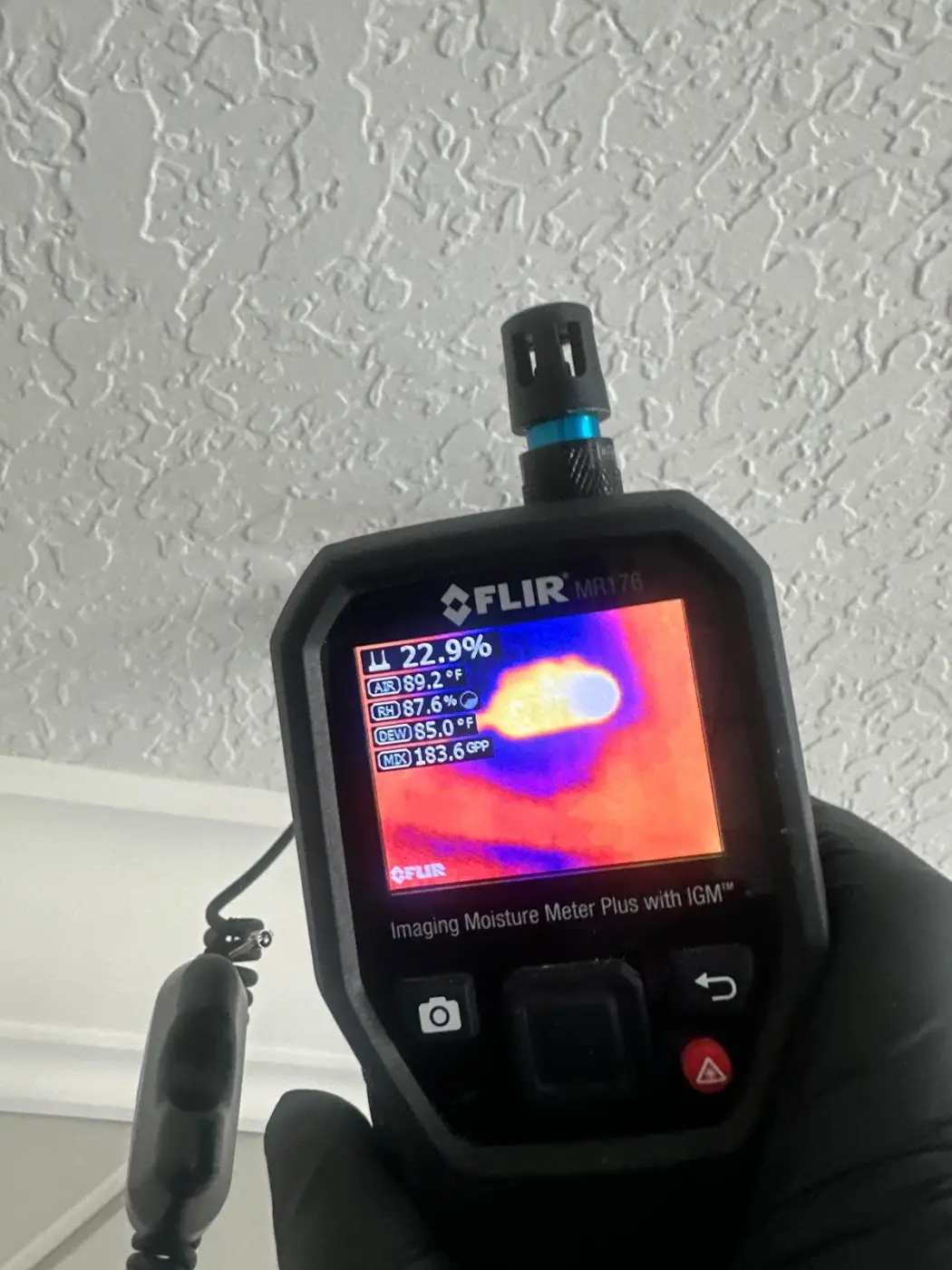
- Ask the restoration provider for the moisture map and drying log. These show where the water went and that the structure was dried properly.
- Keep a list of removed materials and damaged belongings with ages and approximate values.
- Save every receipt, including hotel stays if the house was not livable; many policies have additional living expense coverage.
Mitigation and repair are often handled separately
The emergency drying work and the rebuild are often estimated separately. Water mitigation vs. restoration explains the difference. For what drives the numbers, see how much water damage restoration costs.
Questions to ask your agent before anything happens
- Do I have water backup and sump pump overflow coverage, and what is the limit?
- What is my deductible for water damage?
- Is there a mold limit?
- Am I in a flood zone, and what would a flood policy cost for my house?
- Does my policy pay replacement cost or actual cash value for contents?
Call to be connected with an independent local provider who can map the moisture and start drying.
Insurance and water damage FAQs
Does homeowners insurance cover a flooded basement?
It depends on the cause. A burst pipe in the basement is usually covered. Groundwater seepage and river flooding usually are not, and a sump pump failure needs a backup endorsement.
Can I choose my own restoration company?
In most cases, yes. Insurers may suggest companies from a preferred list, but you can usually choose who works on your home. Check your policy and tell the insurer who you hired.
Will a water damage claim raise my premium?
It can. Some homeowners pay small losses themselves for that reason. Ask your agent how claims affect your rate before deciding.